Bachelor Buttons (Centaurea cyanus, also known as cornflowers) are one of our favorite early spring cut flowers. Their vivid blue petals and airy texture add a classic country feel to our farmhouse bouquets, and they’re a hit with pollinators too. However, are they truly good cut flowers?
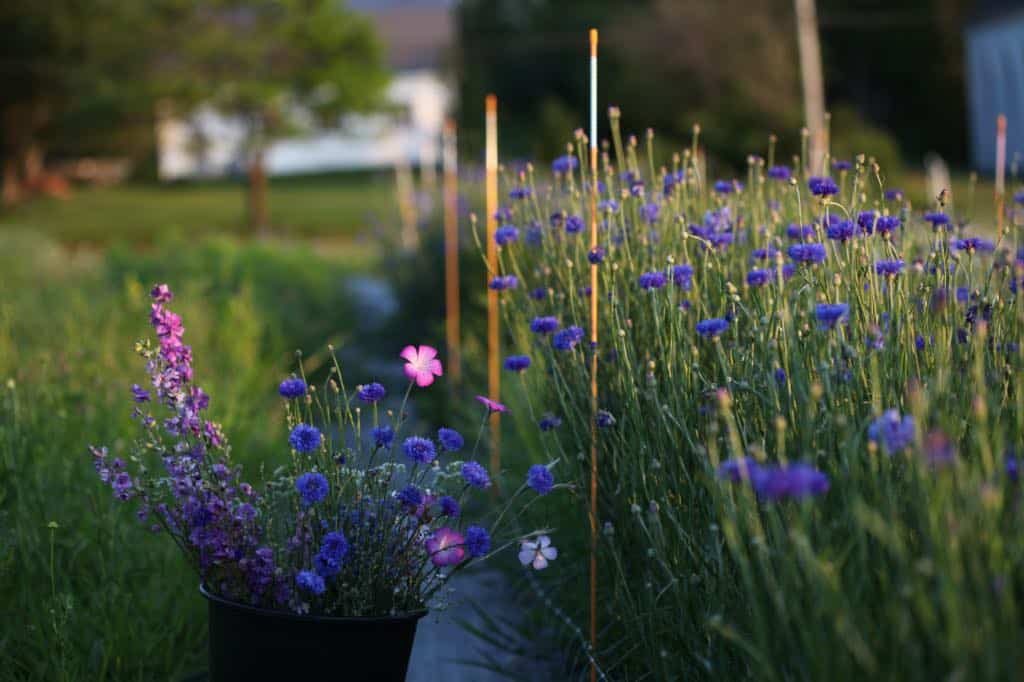
In this post, I’ll share why Bachelor Buttons can be a great choice for cut flower gardens, how we grow and harvest them on our farm, and tips for getting the most out of them in your floral designs.
Quick Verdict: Are Bachelor Buttons Good Cut Flowers?
As a flower farmer who loves the bright blue blooms and rustic charm of bachelor buttons, I can confidently say yes, they are great cut flowers for both home gardeners and small scale growers!
When we were just starting our flower farm, I spent a lot of time researching which varieties would work best for cutting. I was thrilled to discover that Bachelor Buttons aren’t just easy to grow, they also hold up beautifully in arrangements. They’re affordable, cheerful, and bring that perfect pop of blue to any bouquet.
While they aren’t a primary focal flower, they make a beautiful accent in farmhouse bouquets, adding charm and texture to wildflower style arrangements.
Like any flower however, Bachelor Buttons also have their strengths and limitations, so let’s have a quick look at the pros and cons of growing them for cut flower use.
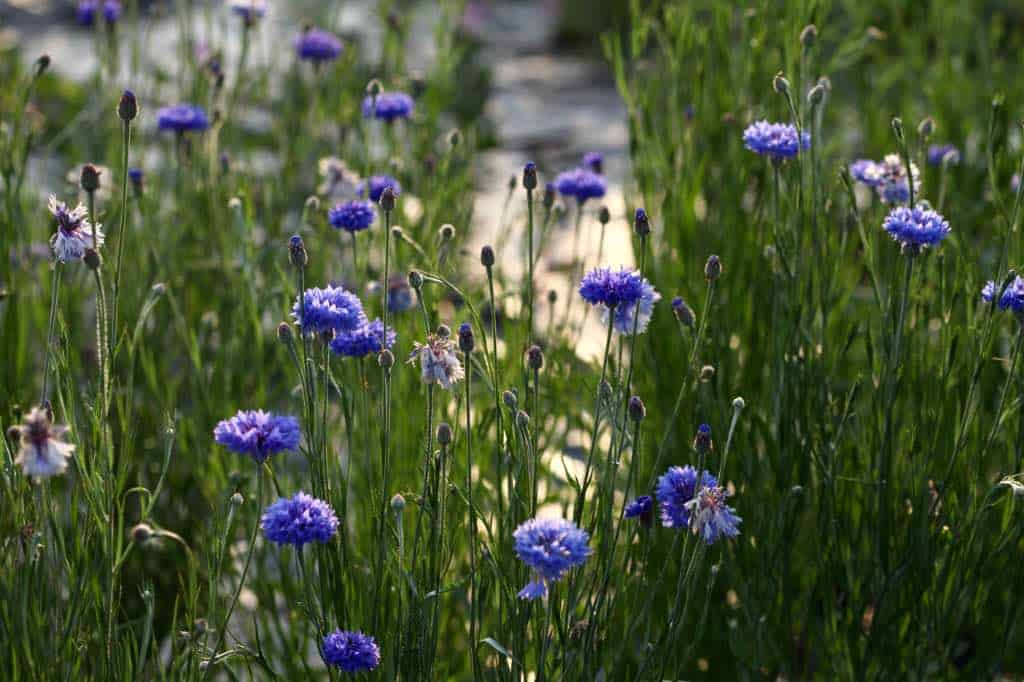
The Pros and Cons of Cutting Bachelor Buttons
Pros:
- Bright, eye catching blue color (rare in the flower world)-also available on pinks, purple, and white
- Long vase life (up to 7 days with proper care)
- Easy to grow and blooms abundantly
- Pollinator friendly and early blooming
- Great for cottage style or rustic arrangements
- Budget friendly and fast-growing
- Cold hardy annual
- Long stems for cutting
- Great to use as a filler or accent flower
Cons:
- Small flower heads; not ideal as focal flowers
- Thin stems can be fragile and sometimes confusing or difficult to cut
- Less impact in formal or high end floral designs
- Limited color range compared to other cut flowers
- Will easily go to seed if not deadheaded, reducing blooming
Even with their limitations, I faithfully plant a row or two of bachelor buttons every year. There’s just something about these brilliant blue blooms that earns them a special spot in the garden.
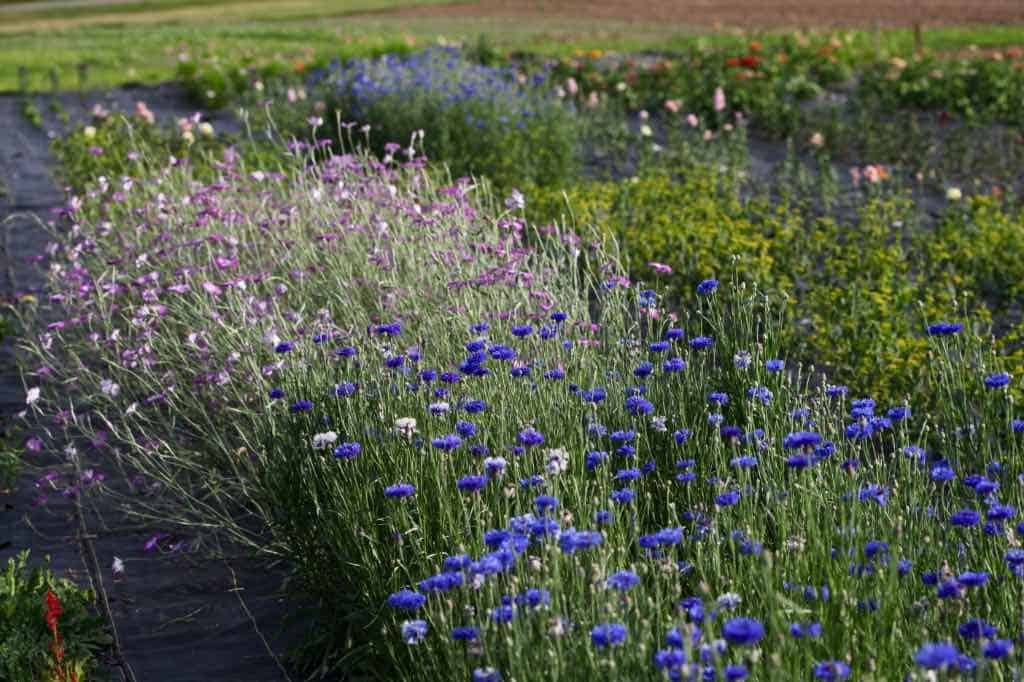
Best Bachelor Button Varieties for Cutting
When it comes to growing Bachelor Buttons (Centaurea cyanus) for cut flower arrangements, variety selection can make a big difference. While most types share similar growing habits, a few stand out for their stem length, bloom size, and striking colors, all important qualities for cutting gardens.
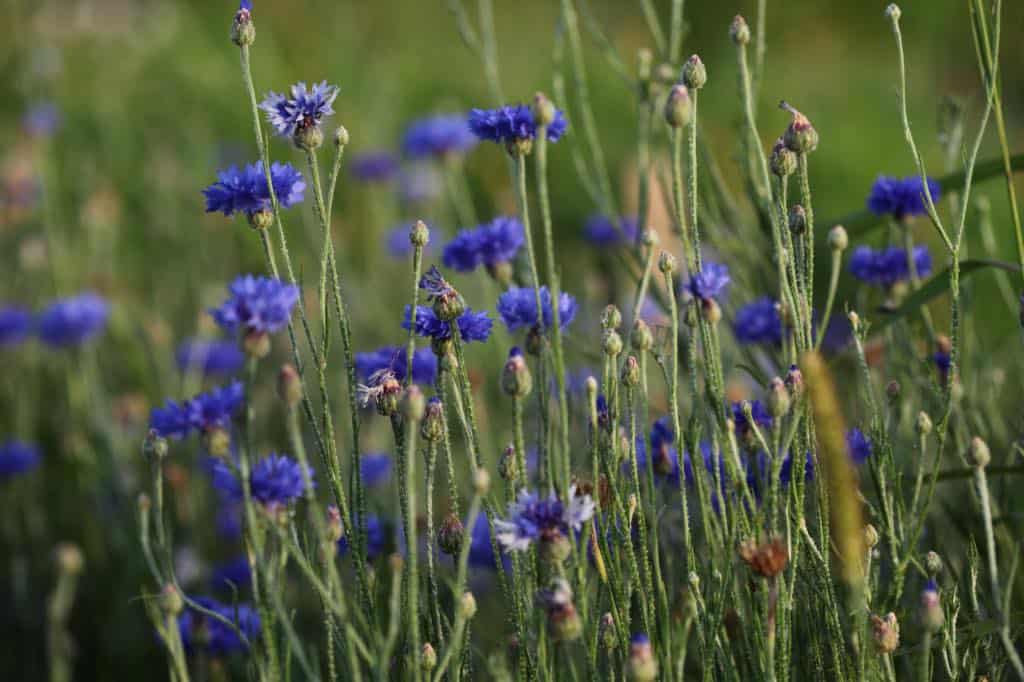
Florist Blue Boy
- This is the variety we’ve grown most often at our flower farm. Florist Blue Boy is the classic cornflower blue, with a rich, intense hue that adds the perfect pop of color to our farmhouse bouquets. The blooms are plentiful, and with regular harvesting, the plants keep producing throughout the early summer.
- One charming feature of this variety is it’s habit of occasional reseeding. In our Zone 5b garden, we’ve had Blue Boy pop up near it’s original planting spot, much to my delight. I love spotting those surprise volunteers and always make use of the blooms in arrangements!
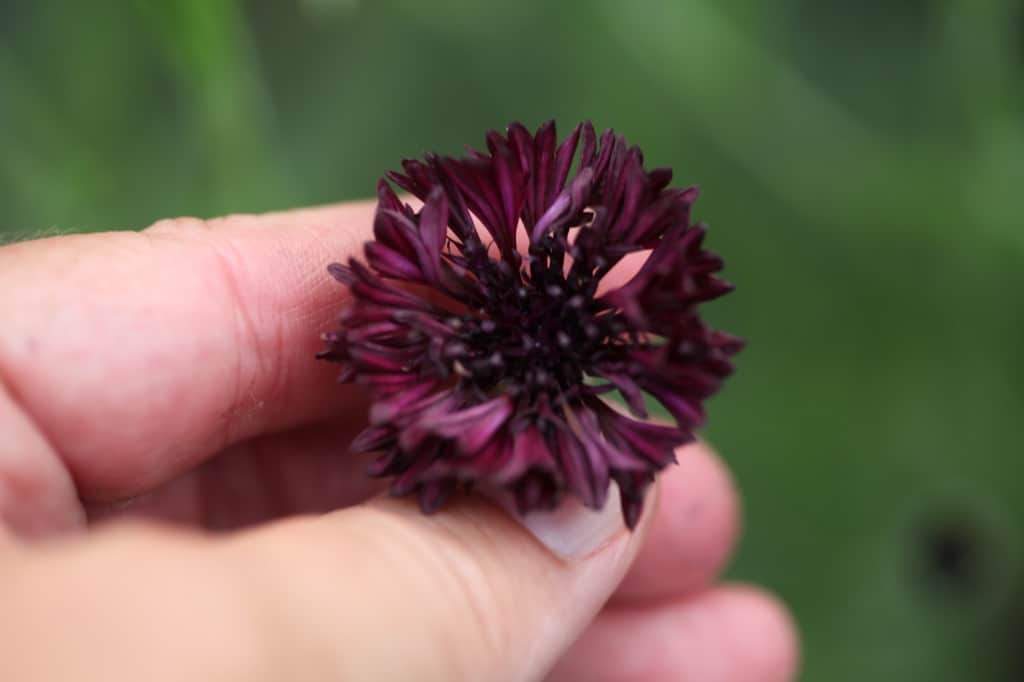
Black Button
- If you’re looking for something a little moodier, Black Button is a great addition. This variety offers deep burgundy-maroon blooms with a dark center, giving bouquets a bit of contrast and drama. It pairs beautifully with lighter pastel flowers or adds depth to autumn toned arrangements.
Other Noteworthy Varieties
- Polka Dot Mix – A colorful blend of blue, pink, white, and lavender cornflowers. Great for a playful, wildflower style bouquet.
- Classic Romantic – A softer palette of mauves and pale pinks, perfect for wedding work or muted, vintage inspired arrangements.
- Red Boy – A rare and eye catching red version, not as common but fun for unique color combinations.

How To Grow Bachelor Buttons for Cut Flower Success
Bachelor Buttons are easygoing annuals, but if you’re growing them for bouquets rather than just borders, a few simple techniques can really boost their performance as cut flowers.
Start Early (Indoors or Direct Sow)
- You can start Bachelor Buttons indoors 4–6 weeks before your last frost or direct sow them outdoors as soon as the soil can be worked. For early blooms and more control over spacing, we often start ours indoors in plug trays, then transplant once the weather allows.
Give Them Full Sun and Good Drainage
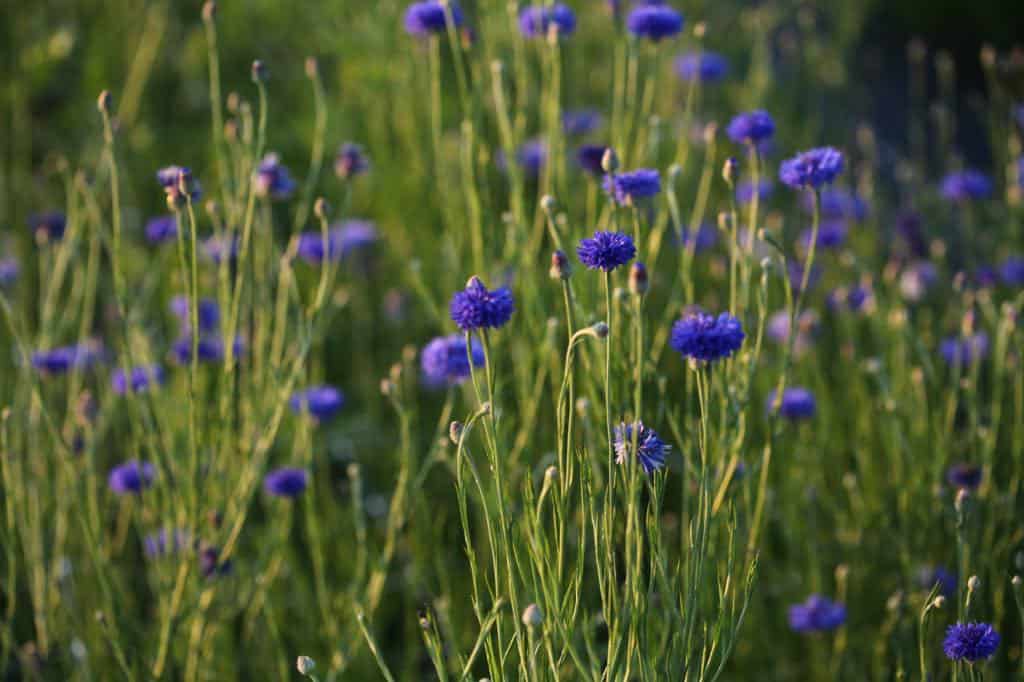
- These hardy plants thrive in full sun and well drained soil. Avoid overly rich soil, which can lead to lush foliage but fewer flowers. They don’t need a lot of fuss, and in fact, they prefer it that way!
Spacing Matters for Stem Length
- To encourage longer stems (which are essential for cutting), space plants at least 9 inches apart. Crowded plants tend to produce shorter, branchier stems, which are harder to work with in bouquets. If you’re after florist quality cuts, proper spacing is key.
- We plant into landscape fabric for weed suppression, which is also helpful for spacing.
Harvest Often to Encourage More Blooms
- Bachelor Buttons are known to be medium producers, similar to the cut and come again flowers, with a narrower blooming time. Cut when the flower is about half way open for the best vase life. Regular cutting also prevents the plant from going to seed too early.
Succession Plant for a Longer Harvest
- These flowers tend to bloom all at once and then slow down. To keep a steady supply for arrangements, succession plant every 2–3 weeks for a longer harvest window. This is especially helpful if you’re growing for markets or CSA bouquets.
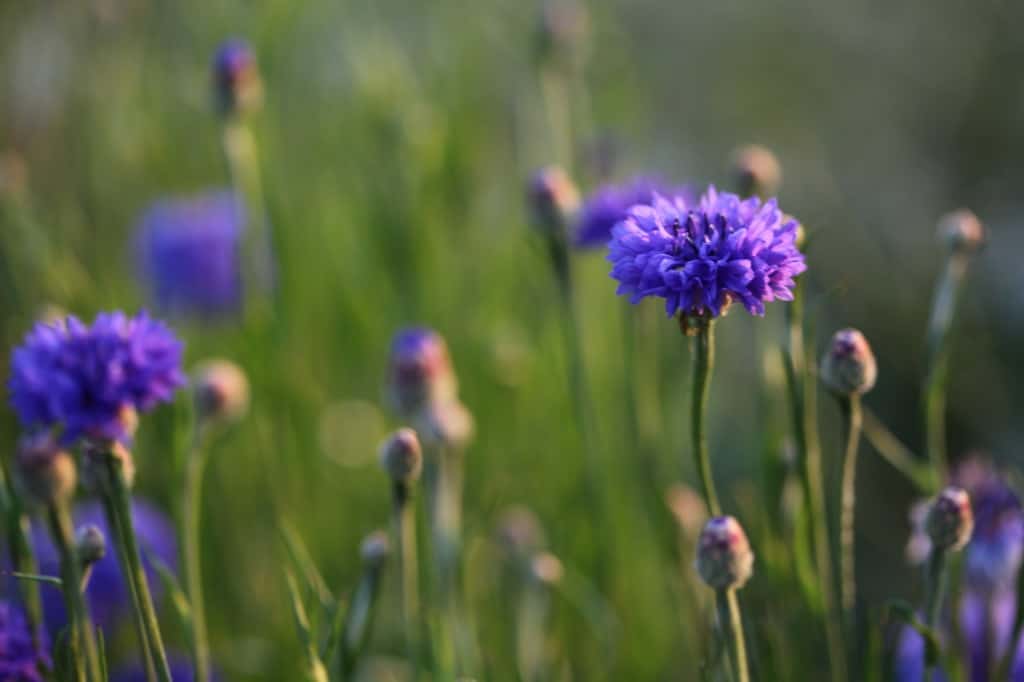
How And When To Harvest Bachelor Buttons
- Harvesting Bachelor Buttons can be somewhat confusing, but once you know the technique, it’s much easier to do.
- Follow the flower stem to the base of the plant and make your cut. Cut off the side branches along the main flower branch, keeping only your main flower stem. If you want you can keep one side shoot, but the main idea is to remove most of the foliage for adequate hydration of the stem and flower.
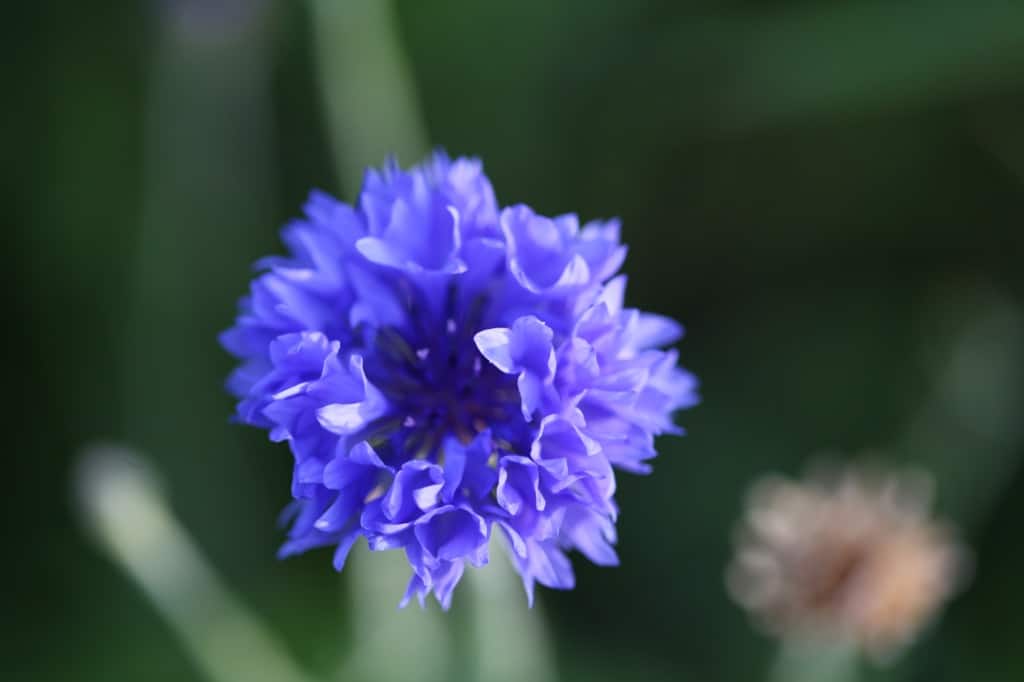
Conditioning Tips For Vase Life
- Flowers should be cut before they are fully opened for best vase life. They will continue to open in the vase as long as they are half open when picked.
- Strip off any foliage that will fall below the waterline.
- Immediately place cut stems in cool water.
- Bachelor Buttons typically last 5–7 days in the vase, especially when harvested early in the morning and conditioned properly.

Are Bachelor Buttons Worth Growing for Cutting? Final Thoughts
Bachelor Buttons will always have a place in our cut flower garden. Their cheerful, abundant blooms and cool weather tolerance make them especially well suited for Zone 5 gardens like ours. These frost tolerant flowers thrive in spring’s cooler temperatures, and reward growers with a flush of double and semi-double blooms that work beautifully in wildflower style arrangements.
While they may not be a showy focal flower, their bright colors, easy growing nature, and ability to reseed make them a reliable and rewarding accent flower for cutting gardens.
If you’re looking for a budget friendly, pollinator loving flower that brings texture and charm to early season bouquets, Bachelor Buttons are absolutely worth growing.

Have you ever grown Bachelor Buttons for cutting? Be sure to leave a comment below to share your experience!
OTHER POSTS YOU MAY LIKE:
PIN IT FOR LATER!