Saving dahlia seeds is easy, fun, and full of surprises. Unlike tubers, which produce exact clones of your dahlia plants, seeds offer genetic variety, and an opportunity to grow completely new, one of a kind flowers.
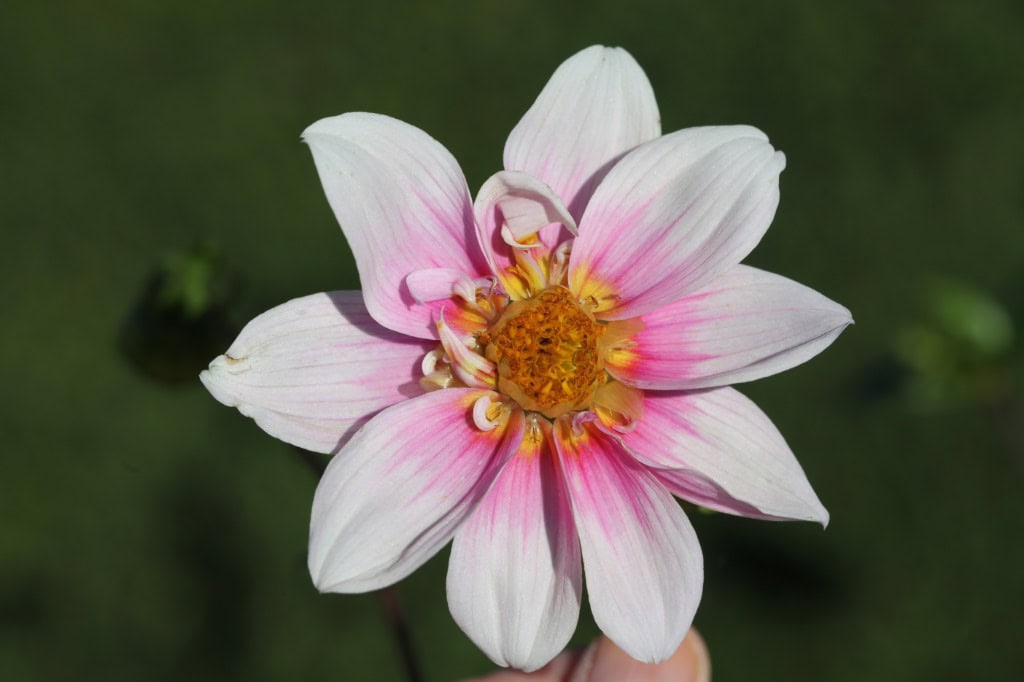
In this guide, I’ll walk you through the full process of saving dahlia seeds. We’ll look at when and how to harvest them, how to dry and store them properly, and what to expect when you plant them.
Why Save Dahlia Seeds?
If you’ve grown dahlias for any length of time, you know how easy it is to fall in love with their color, form, and sheer presence in the garden. While many flower growers focus on dividing and storing tubers at the end of the season, which is a reliable way to maintain your favorite varieties, saving dahlia seeds adds a whole new layer of magic and possibility.
Here’s why I always take time in the fall to save seeds from our dahlias here at the farm, and why you might want to try it too.
1. Create New and Unique Dahlia Varieties
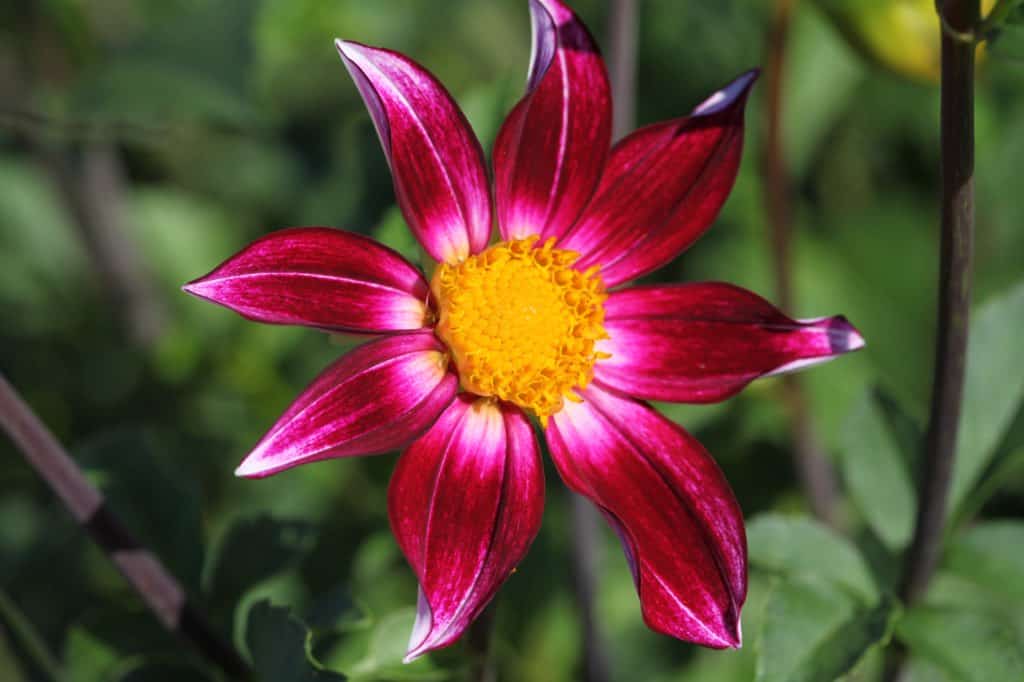
When you save seeds from your dahlias, you’re not just preserving a plant, you’re creating something new. Because most dahlias are hybrids, the seeds they produce will grow into completely unique plants. The flowers that bloom from saved seed might have different colors, petal shapes, or plant habits than their parent plants.
You might grow a flower that’s even more beautiful than the original, or one that surprises you in the best way. It’s one of the most exciting parts of seed saving, and a big reason I look forward to seeing what the next season brings.
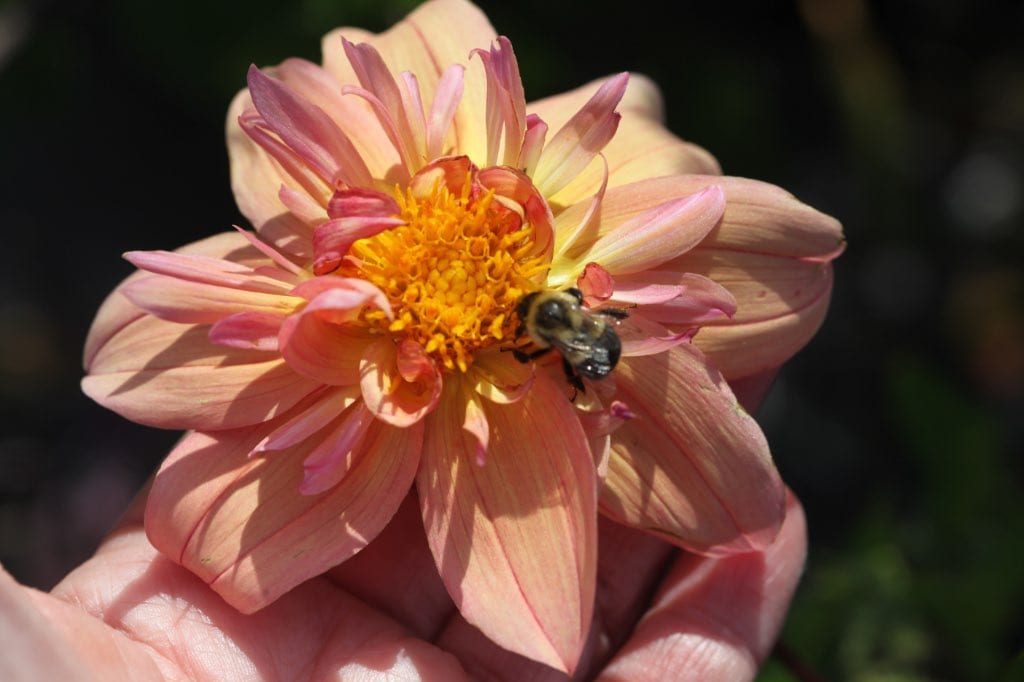
Most home gardeners (myself included) collect dahlia seeds that are the result of natural pollination, usually by bees, butterflies, or other pollinators visiting multiple flowers. These open-pollinated seeds are genetically diverse, and they often produce wonderful surprises.
You can have some control in a sense by planting similar dahlia varieties together, with the hope that the bees will transfer pollen from one variety to another growing close by.
You can even take your seed saving to the next level, and have a little more influence over the outcome, by manually pollinating your dahlias. That means choosing both the seed parent and the pollen parent intentionally, and controlling the pollination process yourself. It’s a bit more work, but also incredibly rewarding.
2. Grow More Dahlias for Less
If you’re building a cut flower garden, especially one that includes lots of dahlias, costs can add up quickly. Tubers are a great investment, but they aren’t always budget-friendly in large numbers.
Saving seeds gives you a cost-effective way to start lots of new plants, perfect for filling out your garden or experimenting with a new flower bed. It’s an economical way to grow your patch without compromising on beauty.
3. Add Biodiversity to Your Garden
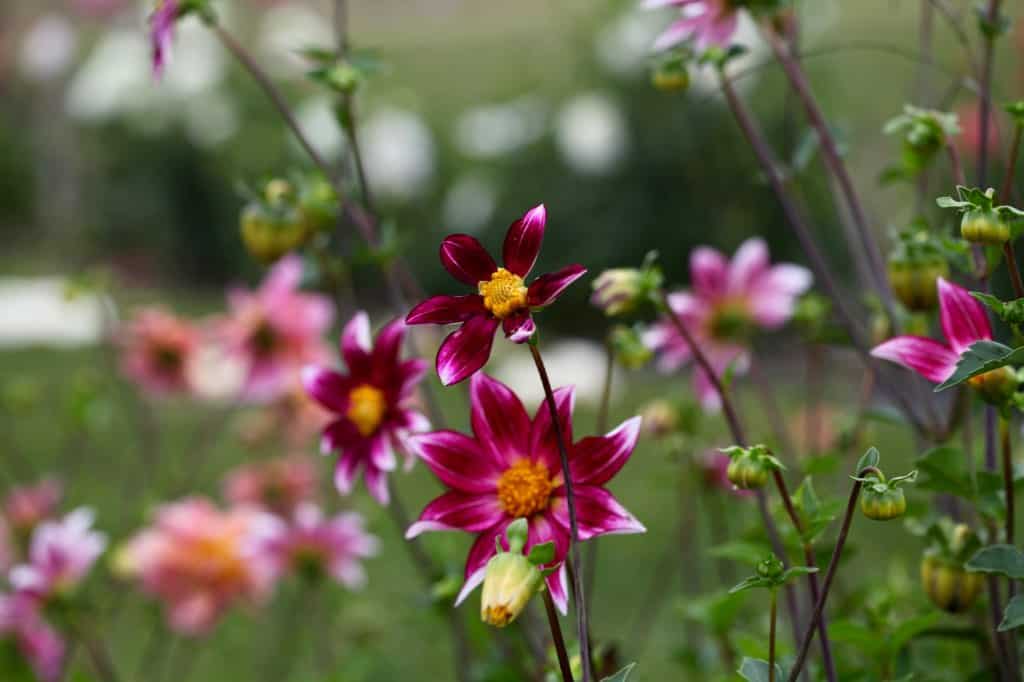
Seed-grown dahlias bring diversity to your garden, both visually and genetically. This is especially beneficial for pollinators and for maintaining a healthy, resilient garden environment.
While tubers give you clones of the same plant, seeds introduce new traits, strengthening the gene pool and adding layers of interest to your space. It’s a small way to support biodiversity, especially if you’re gardening with nature in mind.
4. Learn, Experiment, and Connect With Your Garden
There’s so much to learn from saving your own seeds, from identifying when the seed heads are mature, to planting and watching those first seedlings sprout in spring. You get to experience the full life cycle of the plant, from flower to seed and back to bloom again.
You’ll get to discover which flowers perform best in your garden’s unique conditions. Each season becomes a new chapter, and your garden becomes a story that’s completely your own.
Not to mention the great satisfaction of growing your own unique blooms!
Types Of Dahlias You Might Produce From Seed
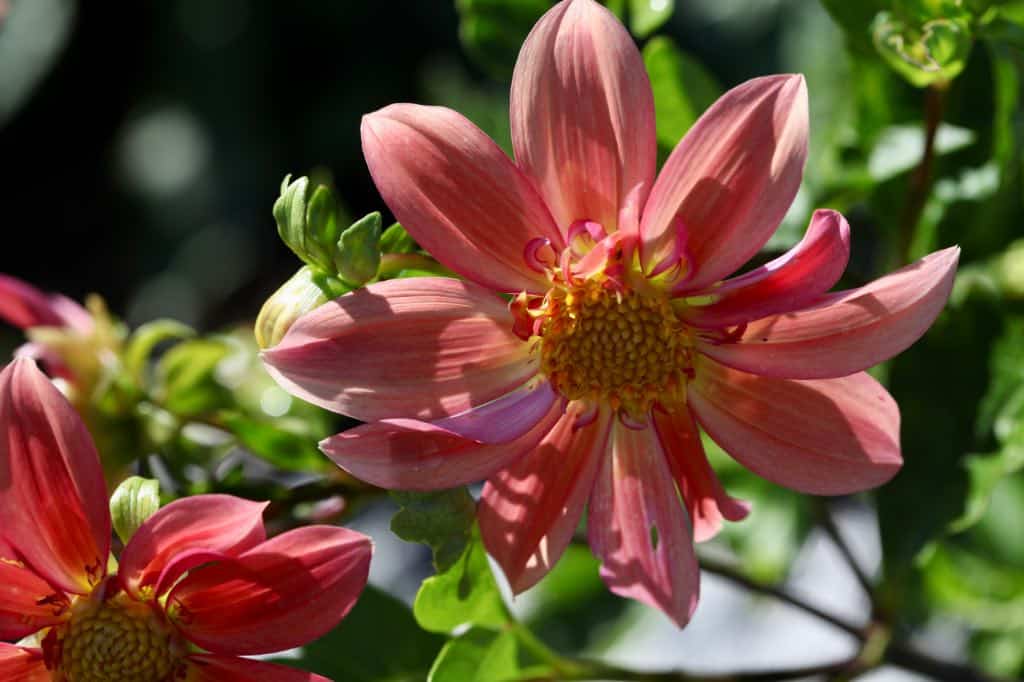
When you collect and grow dahlia seeds, whether from open pollination or intentional hybridizing, the flowers that emerge are almost always different from the parent plant.
That’s because dahlias are genetically complex, and each seed carries a unique mix of traits from both the seed parent (which is the plant that formed the seed) and the pollen parent (which is the plant that provided the pollen).
Each dahlia plant contains a mix of dominant and recessive genes that control traits like:
- Flower form (e.g. ball, cactus, anemone, collarette)
- Petal count and shape
- Color and color patterns
- Stem length and strength
- Plant height and growth habit
When you cross two dahlias, or save seeds from a plant that was pollinated in your garden, the resulting seedlings inherit a shuffled deck of these traits. Some may resemble the parents closely; others may express traits that were hidden in previous generations.
It’s a bit like baking a cake with mostly the same ingredients, but getting a slightly different flavor every time.
Below you will see a picture of the dahlia ‘Breakout’, and 3 of it’s seedlings grown from seed this summer. You can see the differences between the plants, and may not have known they were related unless told.
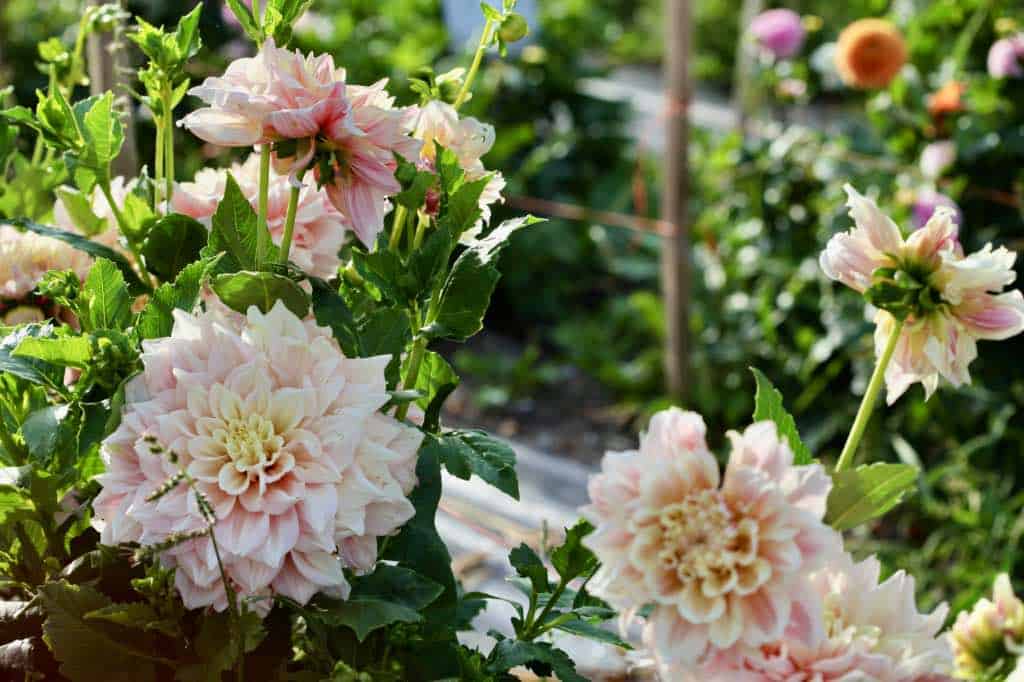
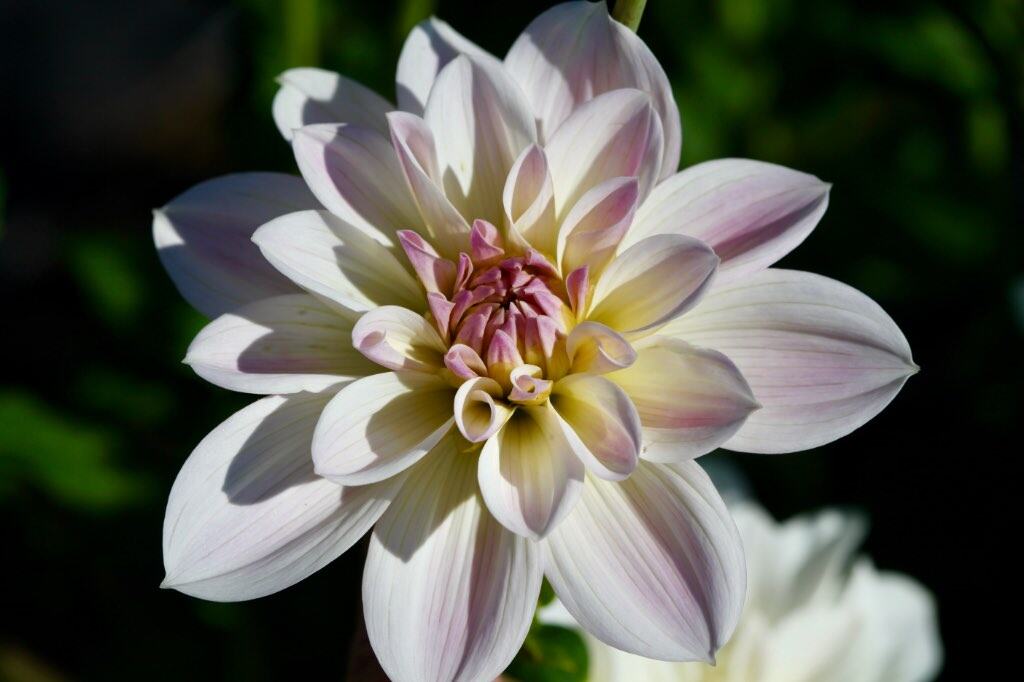
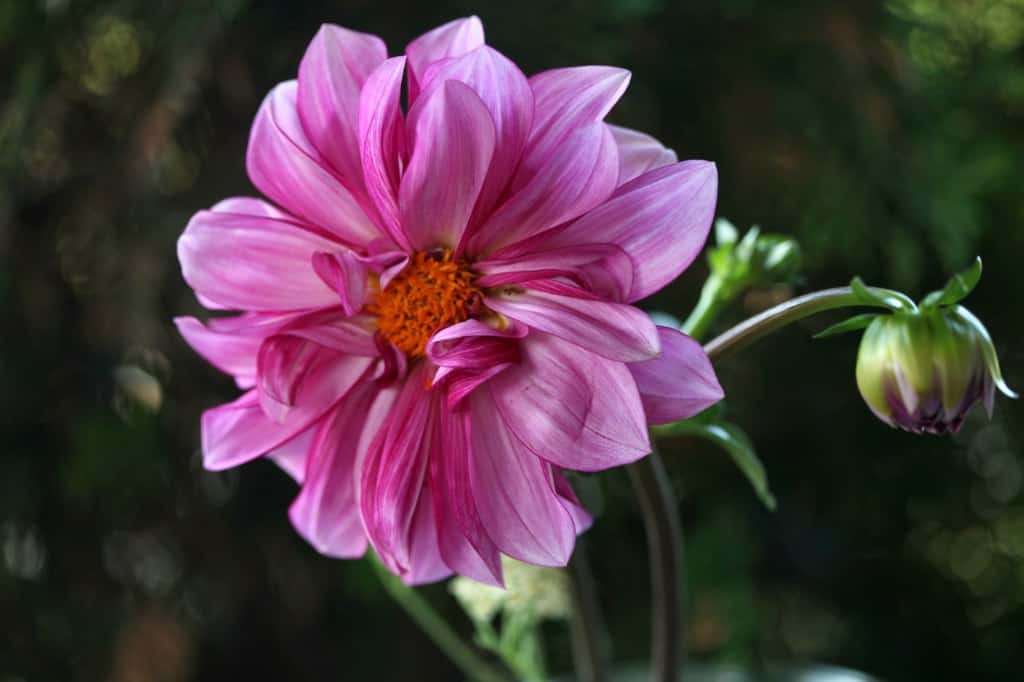
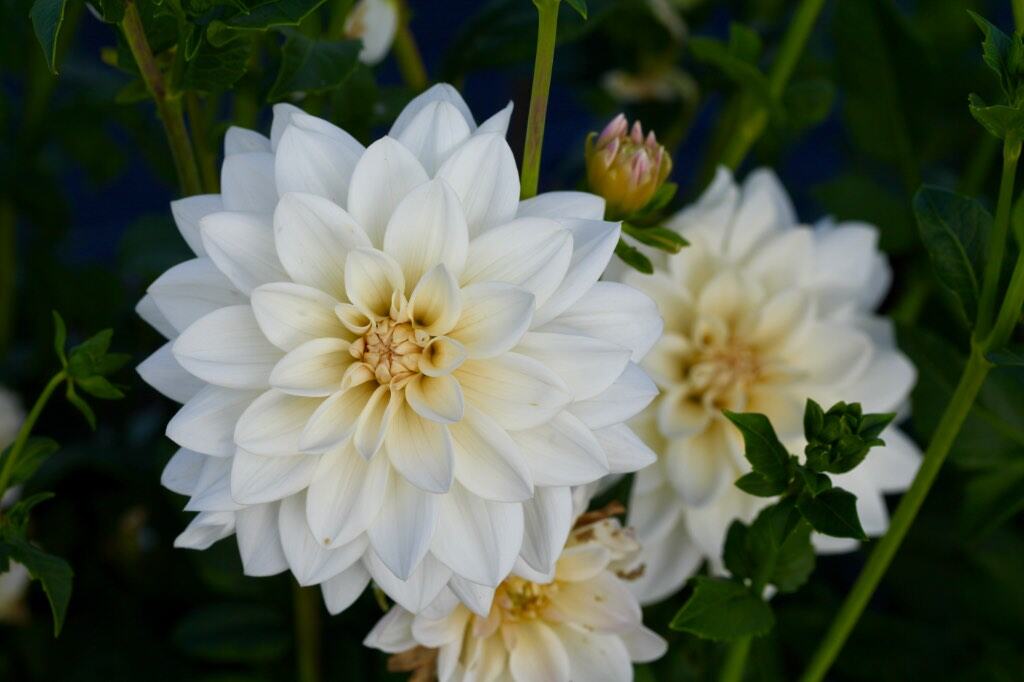
Each seed is a genetic roll of the dice, but by observing and selecting thoughtfully over time, you can start to guide the direction of your own dahlia line.
Now let’s look at collecting the seeds!
Collecting the Dahlia Seed Pods
Timing is everything when it comes to saving dahlia seeds.
Collect them too early, and they may not be mature enough to germinate. However if you wait too long, the weather might get to them first. Learning to recognize the right time to harvest is key, and with a little observation, it becomes second nature.
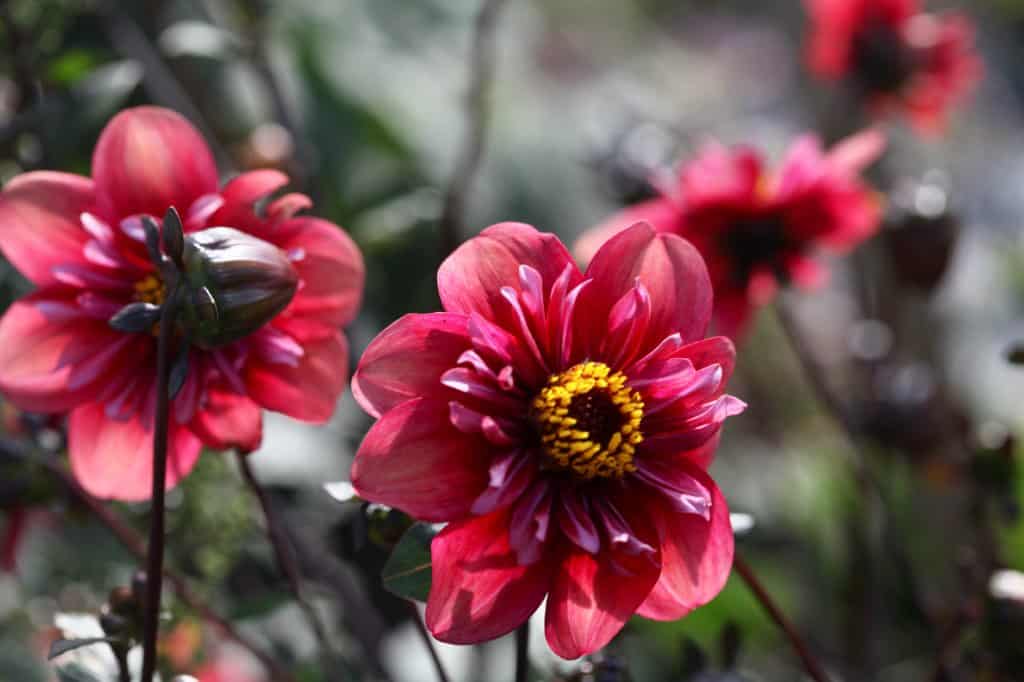
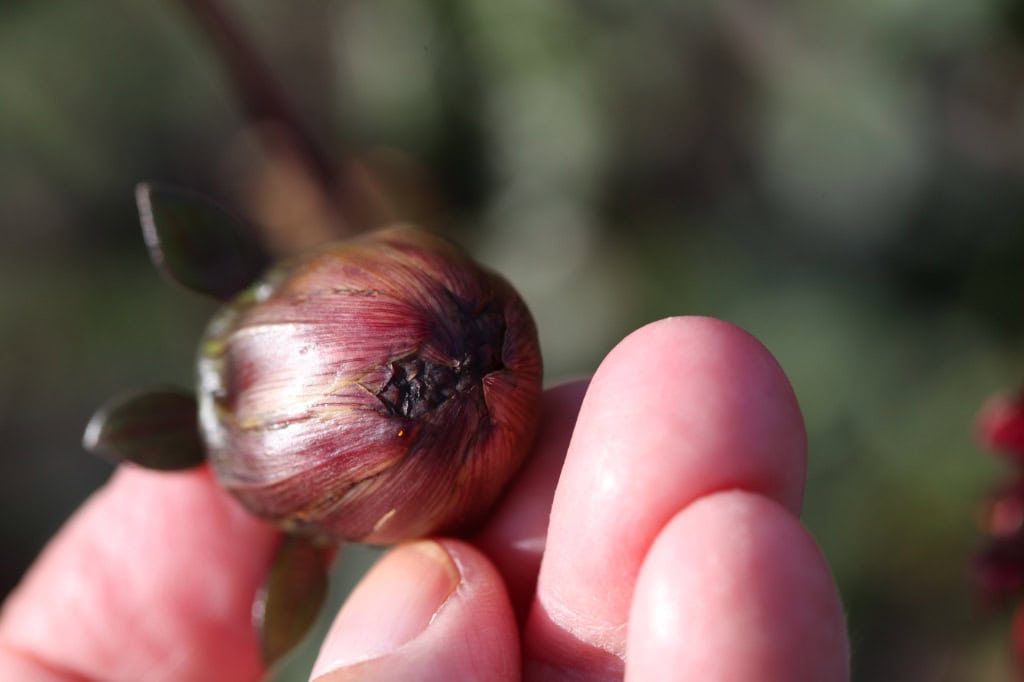
1. Let the Seed Pods Fully Mature on the Plant
After a dahlia bloom has finished flowering, resist the urge to deadhead if you’re hoping to save seed. Instead, let the spent bloom stay on the plant and go to seed naturally.
Seeds will only form if the flower has been pollinated, usually by bees or other pollinators in the garden.
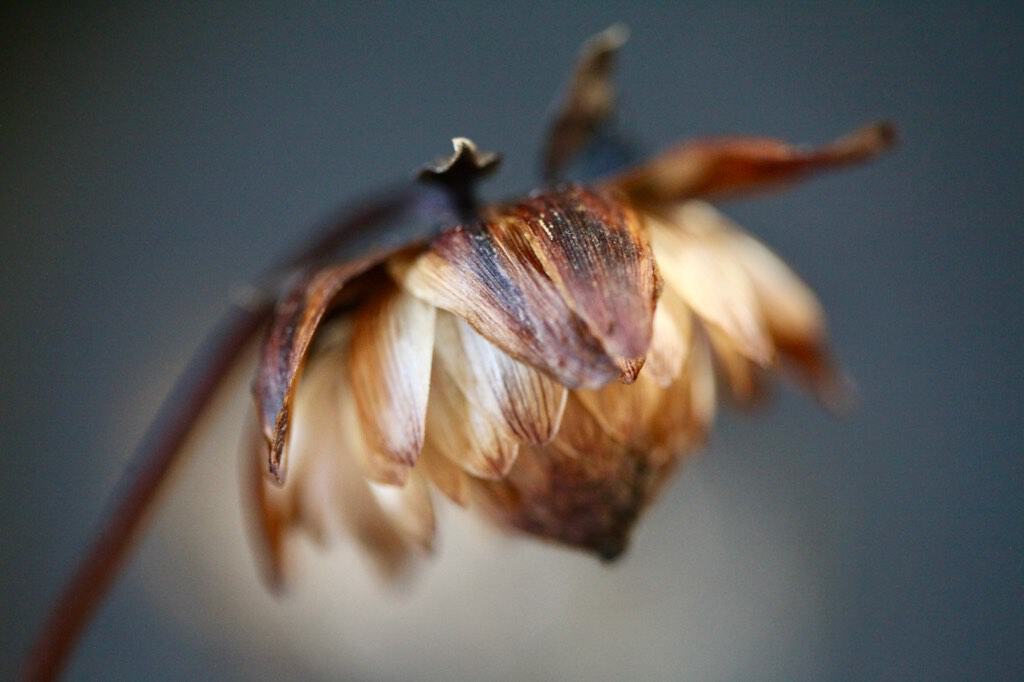
Over time, the petals will wither and fall away, and the bracts will gradually close, leaving behind a seed head at the base of the bloom. This is where the seeds will develop, deep inside the pod.
This pod will be mature 6 to 8 weeks after pollination.
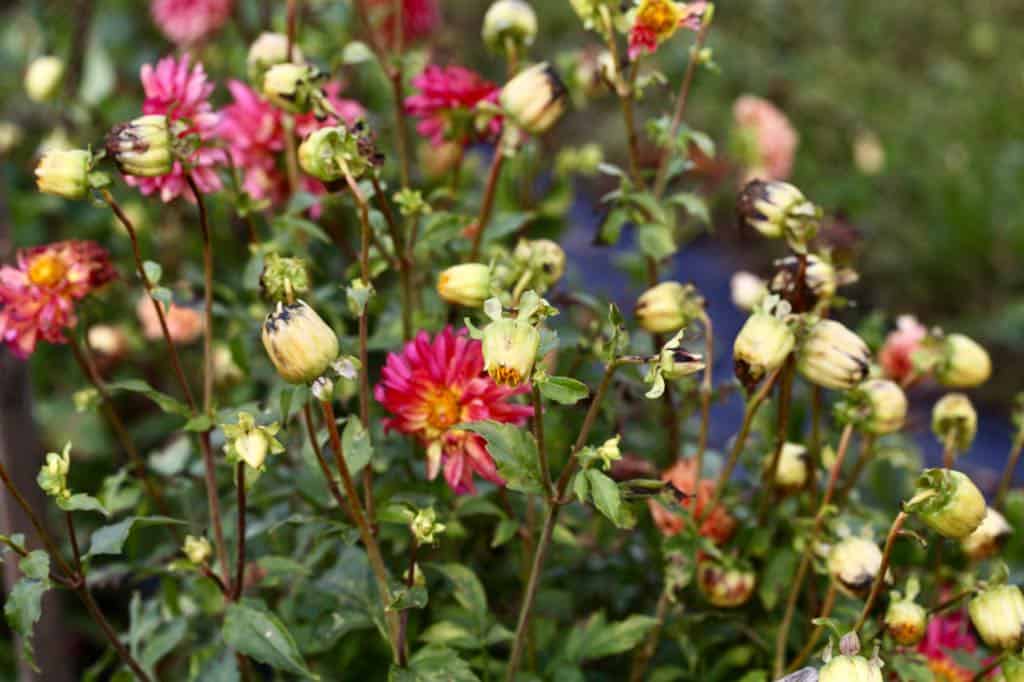
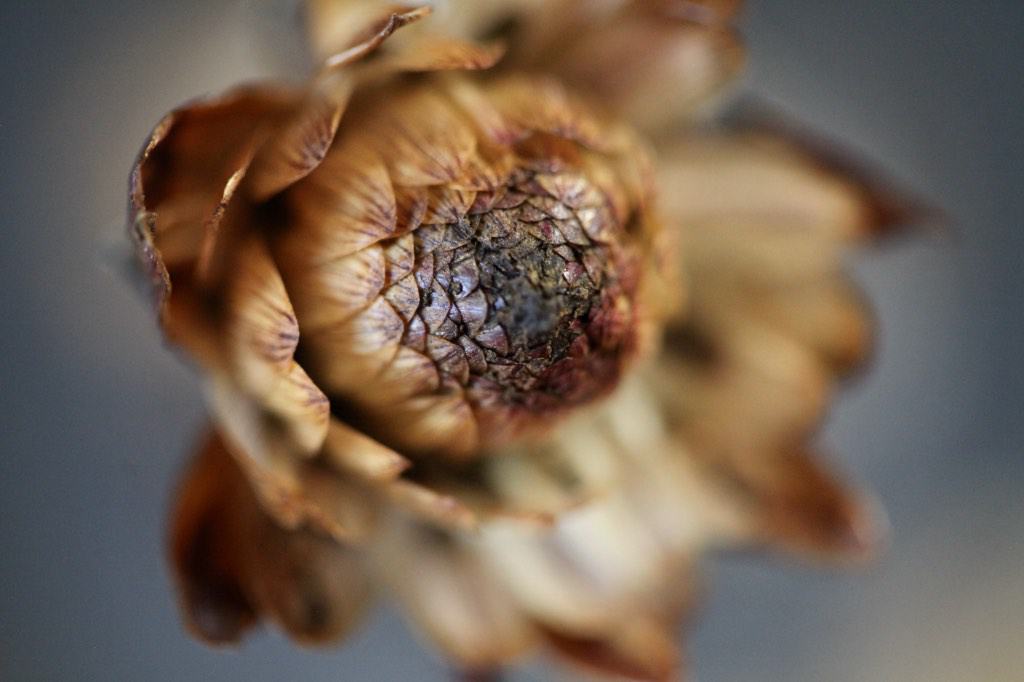
2. Look for Dry, Brown Seed Heads
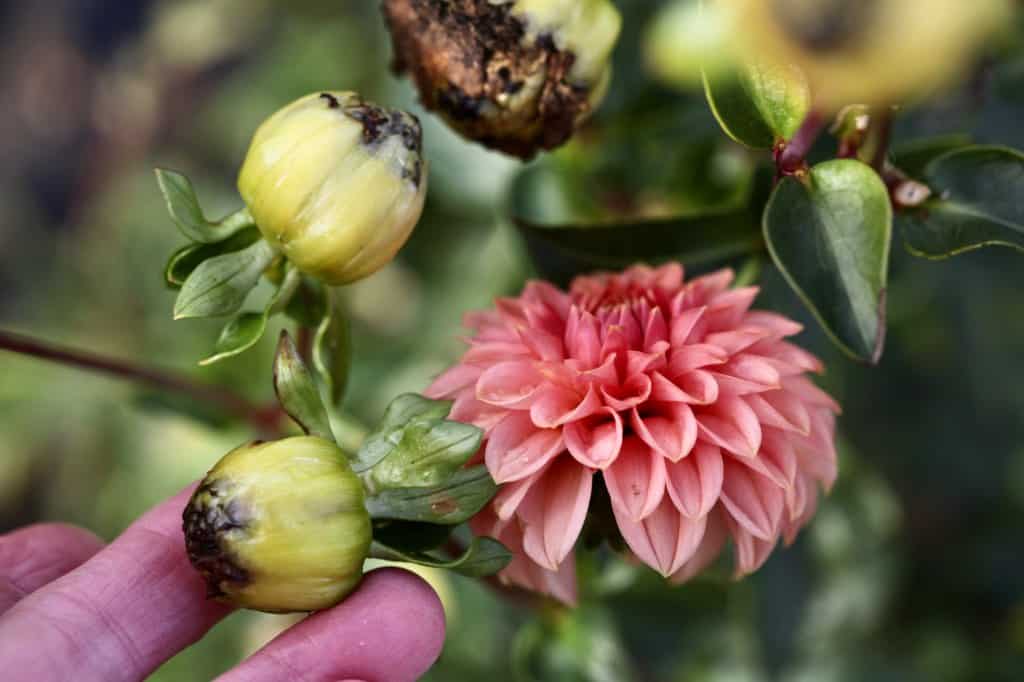
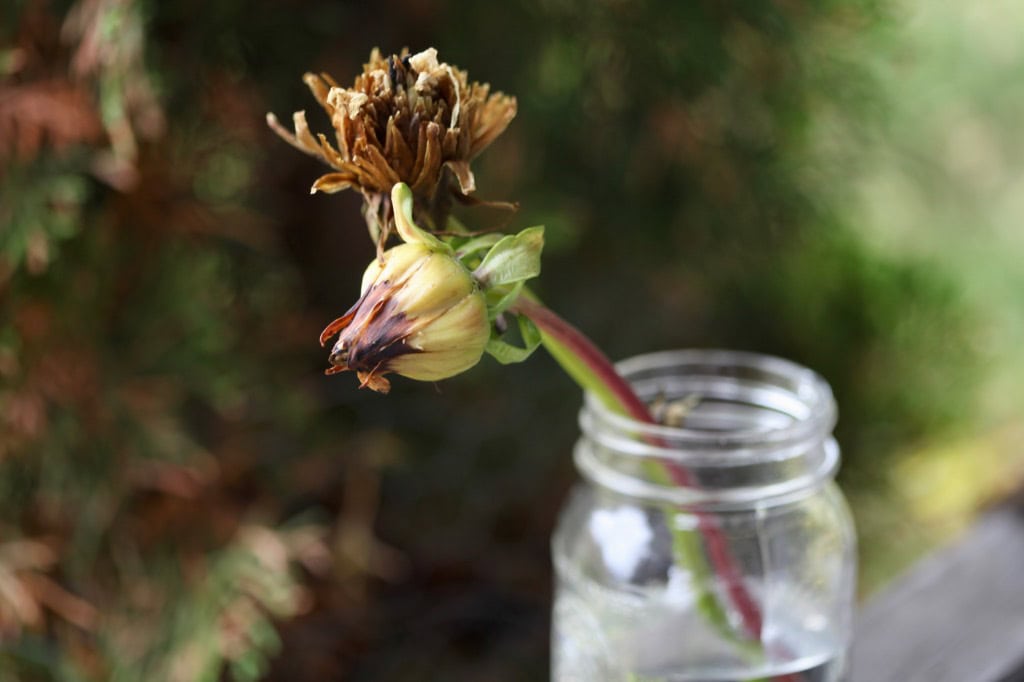
Initially green with a black tip, dahlia seed pods turn yellow, then brown as maturity advances. You can sometime squeeze moisture from the tip of the pod while immature, especially in a moist environment, such as after a rain.
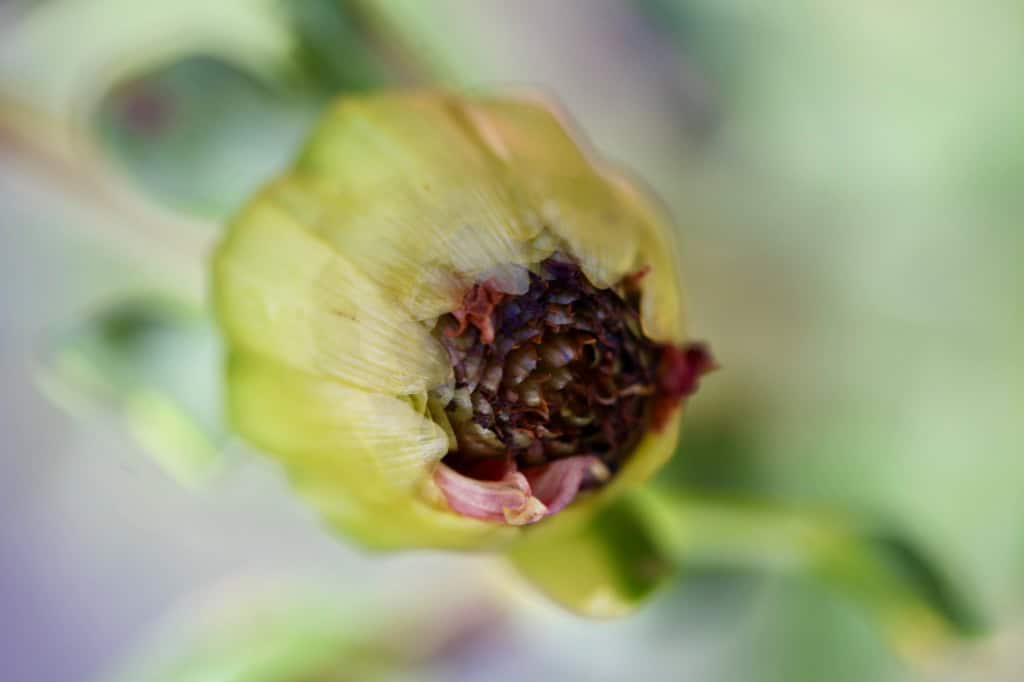
Allow the seed pod to continue to mature and dry on the plant for as long as you can.
Here in our garden, mature dahlia pods can be found towards the end of the growing season, usually in late September through October, depending on the weather. Cool nights and shorter days slow down the plant’s growth, and the seed heads begin to dry down naturally.
Once brown and dry on the plant, it’s time to harvest.
3. Harvest Before Frost
Try to time your harvest for before the first hard frost hits. A light frost may not hurt mature seed heads, but a killing frost can damage the pod and stop the seed development process altogether.
Clip mature seed heads using clean pruners, leaving a short stem attached if possible. Drop the fully mature brown seed pods into a paper bag or open basket to bring them indoors for the next step: drying and seed extraction. Make sure to label the pods with the dahlia variety.
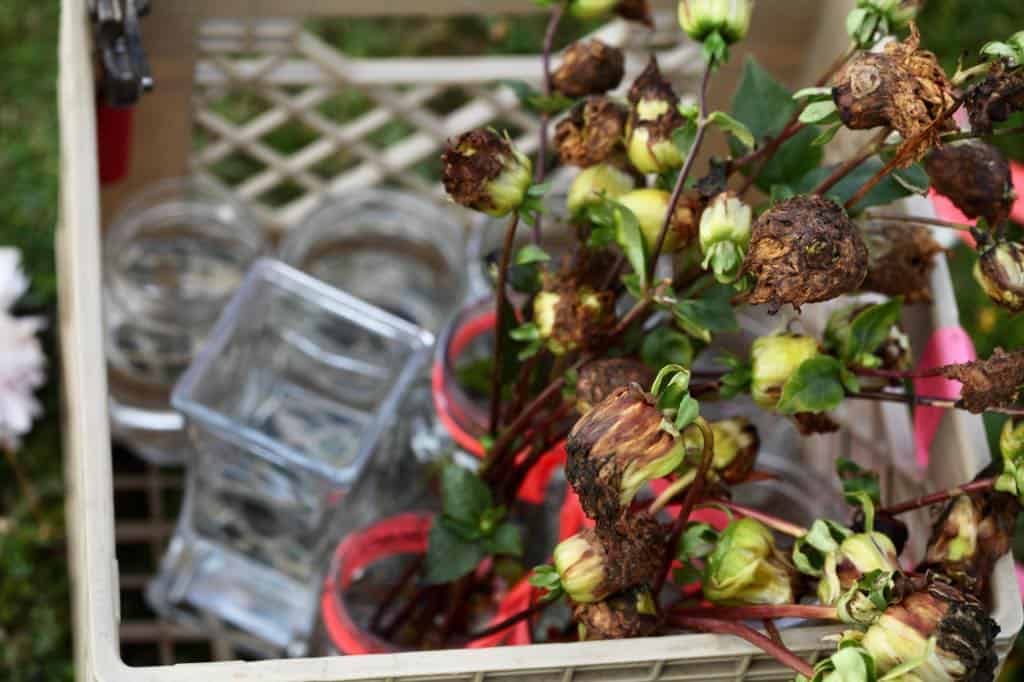
If you still have some pods which are not quite ready, but are close to maturity, and you expect a hard frost, you can harvest these as well. They can still reach maturity with some simple post harvest care indoors, where it is warm.
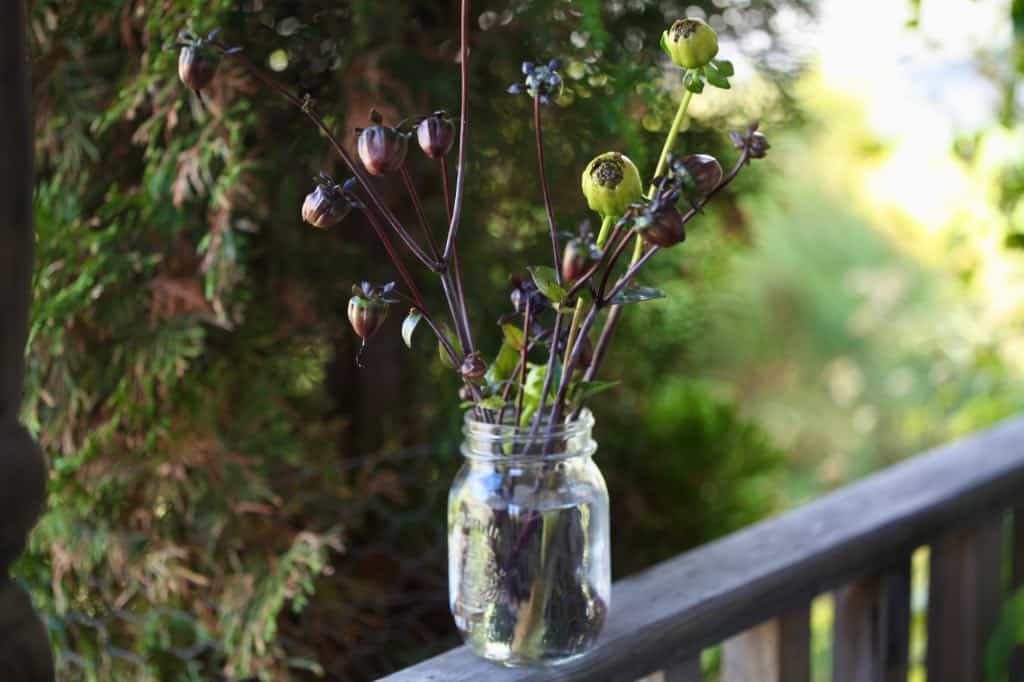
For those not quite mature pods that you want to save before the frost, place these stems into a container of water, and bring indoors. Allow them to continue to dry out and mature for several more weeks if needed, changing the water as necessary until the pods are ready.
4. Quick Signs Your Dahlia Seeds Are Ready:
- The seed pods are brown, dry, and papery.
- The flower petals have completely dried and fallen away.
- Seeds inside feel firm.
- The stem attached to the seed pod has started to dry out and turned brown.
Extracting the Seeds
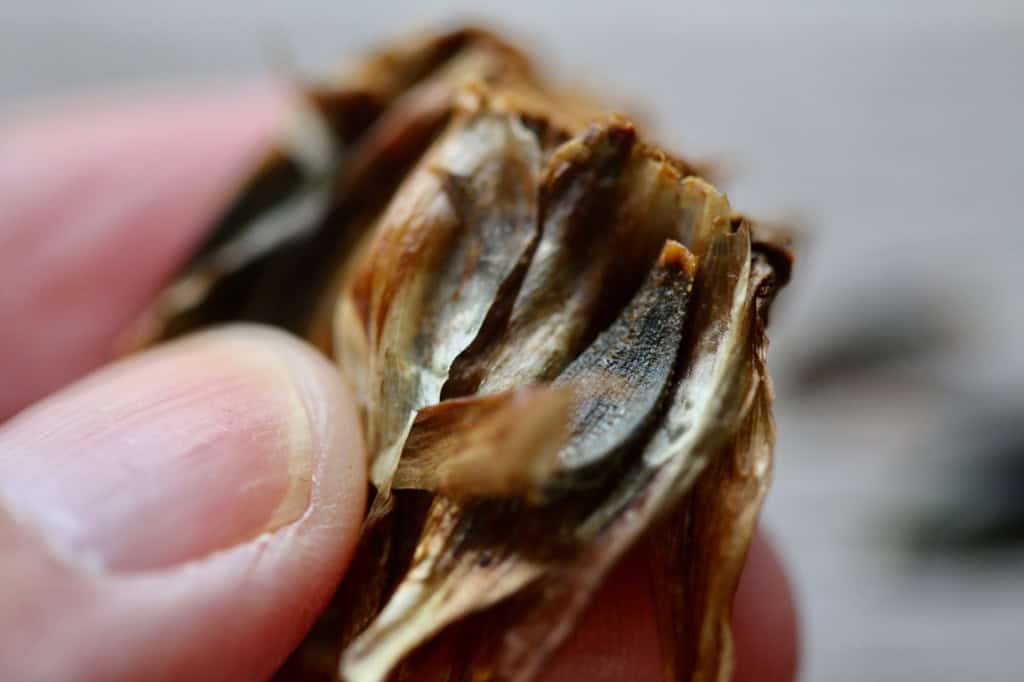
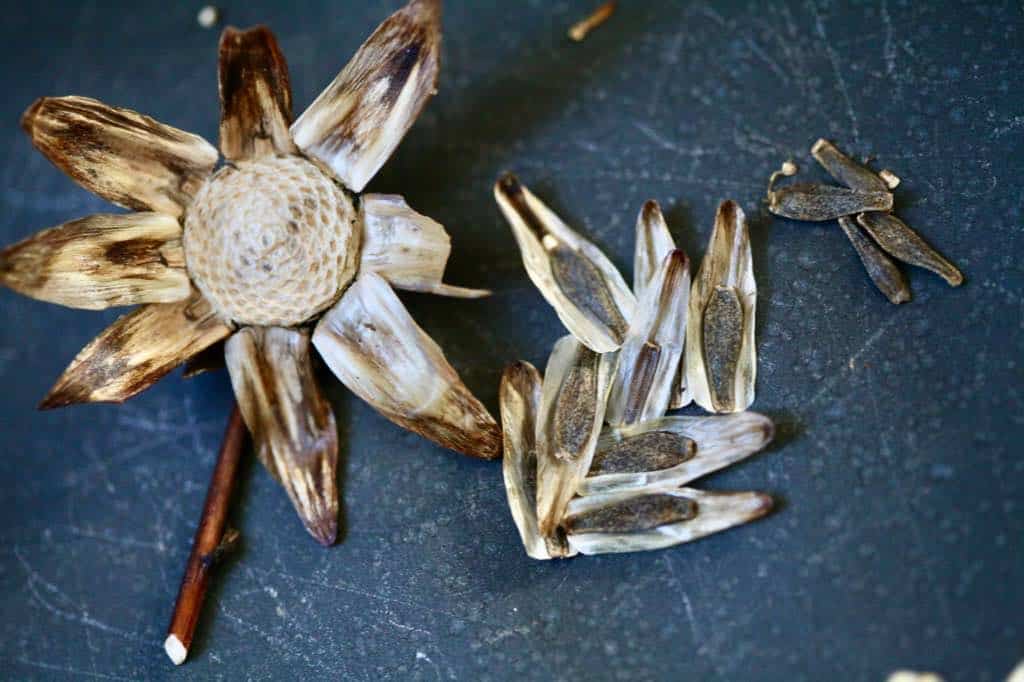
Hold the base of the seed head and gently pull it apart with your fingers. Some gardeners like to snip it open with scissors, but hand-tearing works just as well. You’ll see lots of dried petal-like structures and a few slender seed shapes tucked within.
As you pull apart the seed head, you’ll notice that not every petal-like structure contains a seed. The seeds are usually nestled near the base of the bloom, especially in the central part of the seed head.
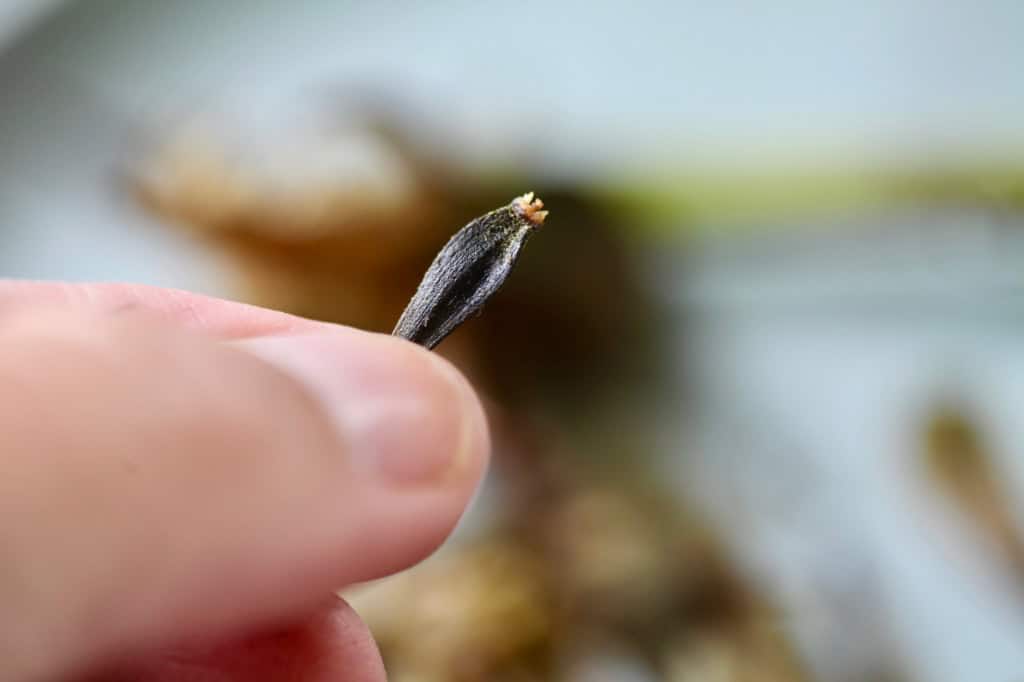
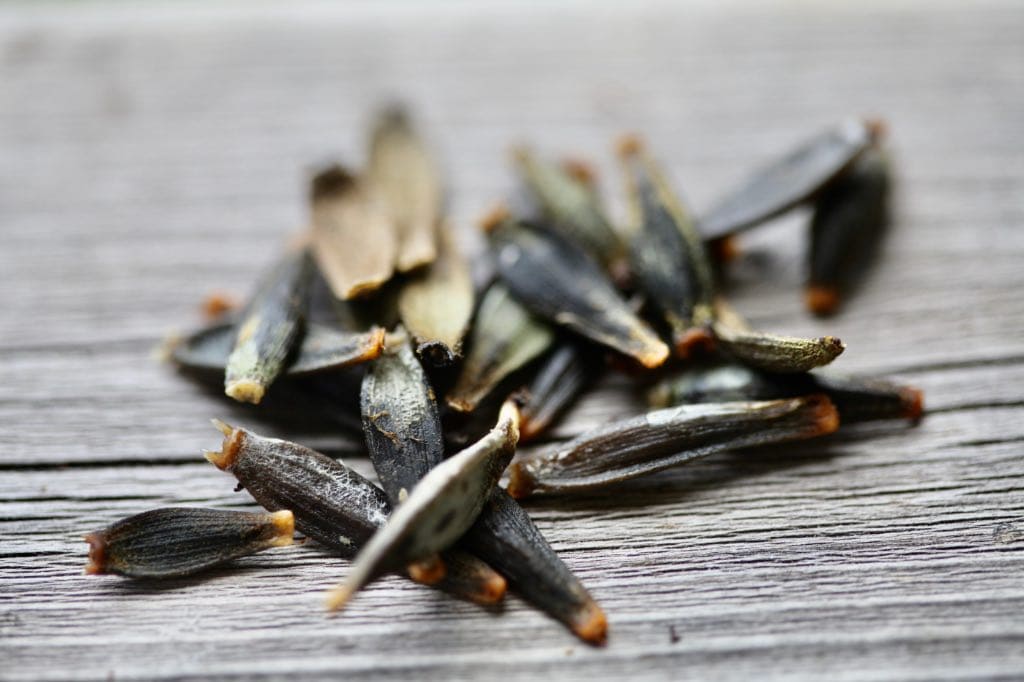
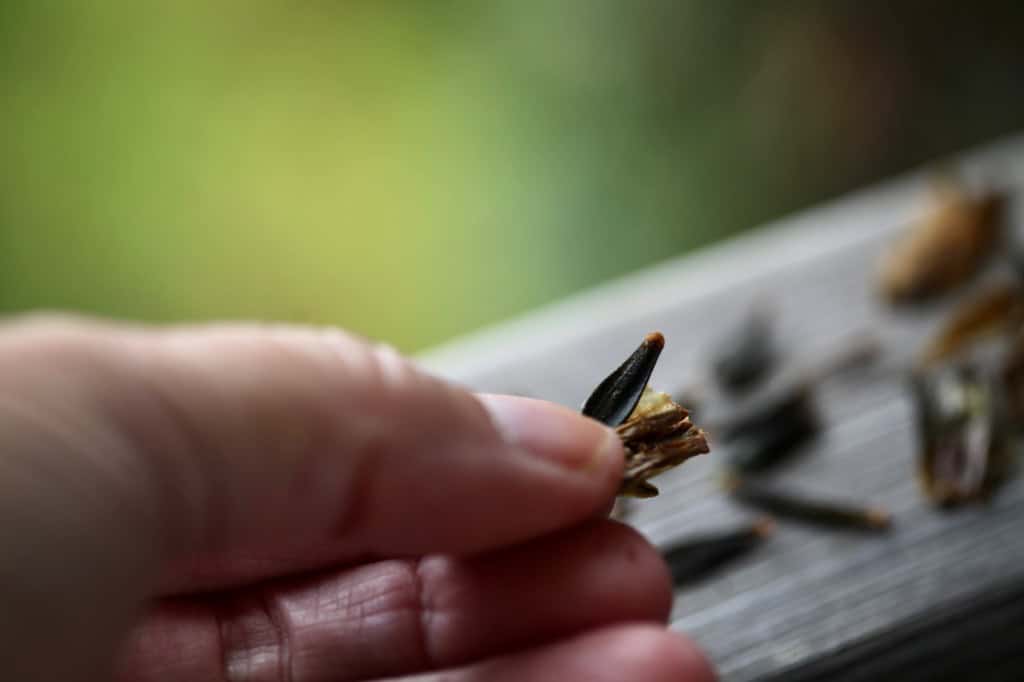
Dahlia seeds are slender, firm, and shaped a bit like miniature arrowheads. They’re usually dark brown or grayish and about half an inch long. A viable seed will feel slightly firm when you press it — not hollow or soft.
Don’t worry if you only collect a small number of viable seeds from a pod, that’s completely normal. Dahlia seed production varies depending on variety, pollination, and weather. Even a handful of good seeds can yield some exciting new plants next season.
Some of the structures inside the seed head will look like small seeds but are actually just dried floral parts. These pieces are often smaller, lighter, papery, and will bend or collapse easily when squeezed. A true seed has some weight and substance to it.

Dry the Seeds Properly
Pull the mature dahlia seeds away from the chaff, and set out on a surface to dry. I like to set mine on a plate to dry overnight.
If working with more than one variety, make sure to label your seeds right away, even while they’re drying. I sometimes prepare my envelopes in advance, and place beside the drying seeds to identify the dahlia variety.
Label and Store the Seeds
Once your dahlia seeds are cleaned and sorted, proper labeling and storage are the final, but very important steps.
It’s easy to think you’ll remember which seeds are which, but believe me, it’s easy to get the varieties mixed up at this stage. Taking a few extra minutes to label and store your seeds correctly will save you time, confusion, and lost varieties later on.
Things to include on the label include: seed parent or variety name, month and year of collection, bloom description, and any growing notes ( such as “excellent vase life” or “short plant with strong stems”).
To keep your seeds dry and viable, choose breathable, protective storage options. For short-term or small-batch storage, paper envelopes are perfect. They allow airflow and help prevent moisture buildup.
I like to use paper envelopes rather than plastic for storing. You can label and date right on the envelope itself. The paper also helps to wick away any moisture from the seeds, whereas plastic holds moisture, which can lead to mold formation.
Store in a cool, dry and dark location until ready for planting next season.

Frequently Asked Questions
Yes, you can save seeds from hybrid dahlias, but there’s a catch. Hybrid dahlias (which most garden varieties are) don’t grow “true to type” from seed. This means the flowers grown from those seeds won’t look exactly like the parent plant.
When stored properly, dahlia seeds can remain viable for 2 to 3 years — sometimes even longer. Keep them in a cool, dry, and dark place for longest shelf life.
This depends on your goal. Save tubers if you want to grow the same dahlia again. Tubers are clones and will reproduce the exact same plant. Save seeds if you’re curious about creating new varieties.
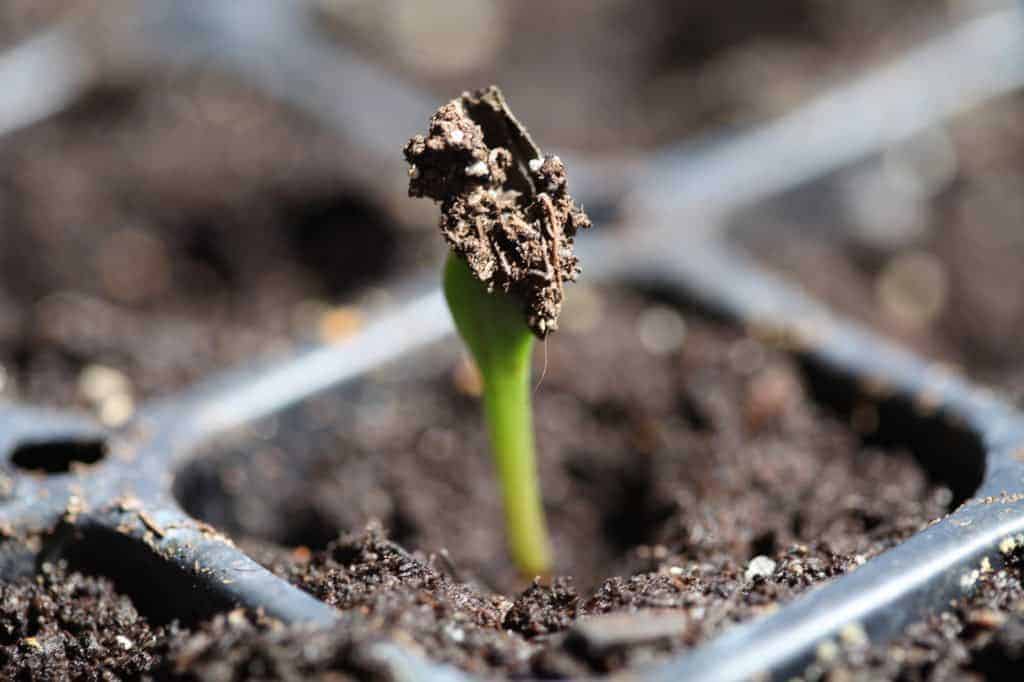
Yes with the right care you’ll be able to see what your new dahlias will look like in their first season, because the plants can bloom in their first year!

In Summary
Saving dahlia seeds is one of those quiet, rewarding fall rituals that brings both beauty and curiosity to the next growing season. Whether you’re a backyard gardener or growing flowers for bouquets and markets, seed saving is a simple step with a lot of heart behind it, and the surprises are just half the fun.
Whether you’re hoping to stretch your flower budget, experiment with new blooms, or simply enjoy the wonder of growing something from scratch, seed saving offers a hands on way to be part of the full life cycle of your dahlias.
And the best part? You never know what you’ll grow. Each seed is a small mystery, a gift from your garden, waiting to bloom into something unexpected and uniquely yours.
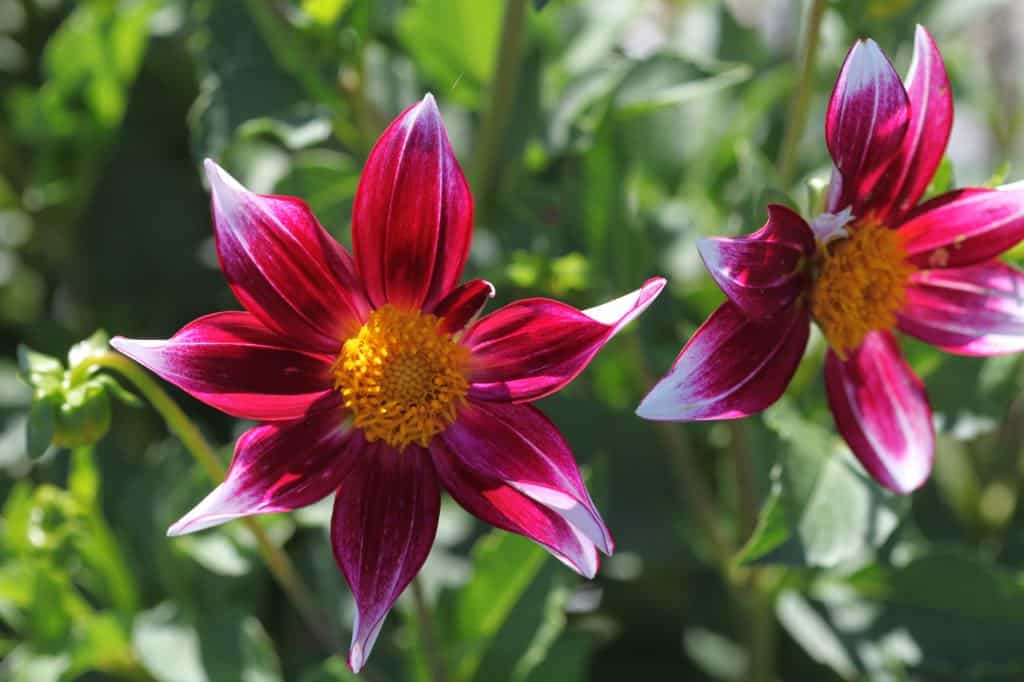
Have you ever saved and grown your own dahlia seeds? Be sure to leave a comment below, to share your experience!
PIN IT FOR LATER


Leave a Reply